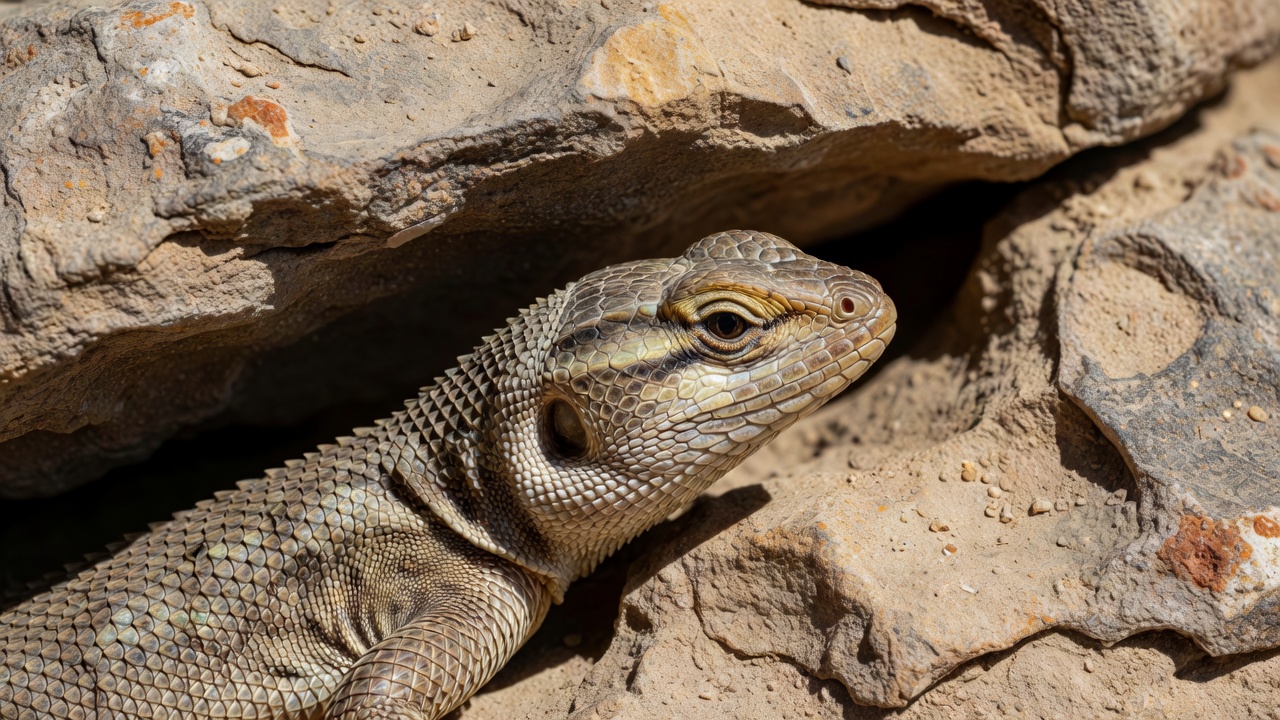
A desert animal gains water from drinking, food and the metabolism of nutrients. It loses water through breathing, excretion and evaporation from body surfaces. Which route matters most depends on the species, its diet and the weather. A seed-eating rodent and an insect-eating lizard can occupy the same valley while operating very different budgets. The useful question is not simply “How does it survive without water?” but “Where does its water come from, and when is it lost?”
Start with the hours an animal avoids
Burrows soften the daily swing between a hot surface and a cool night. Their temperature and humidity depend on depth, soil and ventilation, but they often provide a less demanding environment than exposed ground. A nocturnal animal may reduce both heat exposure and evaporative demand by remaining below ground during the day.
Kangaroo rats of the genus Dipodomys illustrate how several mechanisms combine. Efficient kidneys reduce water lost in urine, and nasal passages can recover some moisture from exhaled air. Food supplies water directly and through metabolism. These traits do not make the animals independent of habitat: suitable seeds, workable soil and secure shelter still matter.
Read ears as exchange surfaces
The fennec fox’s large ears support sensitive hearing and can contribute to heat exchange. Blood flow through exposed surfaces helps regulate heat transfer when conditions allow. Yet the direction of heat exchange depends on the temperature difference between an animal and its surroundings. An ear is not a cooling device that works identically in every circumstance.
Body size, fur, posture and access to shelter alter the picture. Pale coloration may influence absorbed radiation, but colour also relates to camouflage and evolutionary history. A responsible explanation keeps these functions separate rather than giving every visible feature a single purpose. Watching an animal move between shade and open ground often tells more than a close portrait does.
Notice the cost of cooling
Evaporative cooling uses water. Panting, sweating and other routes can protect an animal from overheating while increasing its water requirement. Some desert-adapted mammals tolerate controlled changes in body temperature, reducing the need for immediate evaporative cooling under particular conditions. This is regulated physiology, not immunity to dangerous heat.
Reptiles often manage body temperature by changing location, orientation or activity time. A lizard briefly lifting its feet or moving into shade is responding to its immediate thermal environment. Do not provoke a movement to demonstrate this behaviour. An observer who blocks the nearest crevice may remove the very option that makes the animal’s water and energy budget workable.
Look at plants without simplifying them
Succulent tissues store water, while waxy surfaces and reduced leaves can limit losses. In many cacti and some other succulents, crassulacean acid metabolism, usually shortened to CAM, allows much carbon dioxide uptake to occur at night. Stomata can then remain more closed during the hotter part of the day. Not every desert plant is succulent, and not every succulent uses CAM in the same way.
Other plants avoid drought through short life cycles, growing and setting seed after favourable rain. Shrubs may shed leaves during dry periods or draw on different soil depths. Roots are not uniformly deep: some systems exploit brief near-surface moisture. Leave leaves, flowers and roots intact. A plant’s relationship with runoff, shade and soil is usually more instructive than a detached specimen.
Research note: adaptation is not a forecast
An evolved trait describes a history of selection, not a guarantee against future conditions. Longer heat events, altered rainfall and loss of shade can exceed the circumstances under which a trait is useful. Short observations also cannot distinguish acclimatisation from inherited differences. Look for studies that identify the species, measurement method and environmental conditions.
For field notes, record the time, weather, substrate, available shade and your observation distance. Describe what happened before proposing why it happened. “Entered a crevice as sunlight reached the rock” is useful evidence; “could not tolerate heat” is an interpretation that needs more support.
Continue with reliable context
- Mojave National Preserve: animals and desert life
- Arizona-Sonora Desert Museum — regional natural history and desert ecology.
- Specialist species — connect mechanisms to particular animals.