Rarity is not a single biological condition. A species may have a naturally small range, occur at low density, be difficult to detect or have declined because of human pressures. These explanations should not be treated as interchangeable. Nor does an animal’s absence from a short visit establish its absence from a place. The profiles below focus on ecological relationships, keeping precise sites and encounter promises out of the story.
Fennec fox: a life around shelter
The fennec fox, Vulpes zerda, inhabits sandy desert environments in North Africa. Its conspicuous ears are useful for hearing and can assist heat exchange, while fur on the feet helps insulate against the substrate. It is primarily nocturnal and uses dens, making a daytime landscape a poor guide to its activity.
Fennecs eat a mixture of animal and plant foods, with availability varying locally. A fox approaching people is not evidence that feeding is harmless. Food provision can change behaviour and bring animals near roads, dogs or conflict. Observe at a distance and avoid den entrances. A photograph obtained by drawing an animal away from shelter has changed the situation it claims to document.
Mojave desert tortoise: the value of a burrow
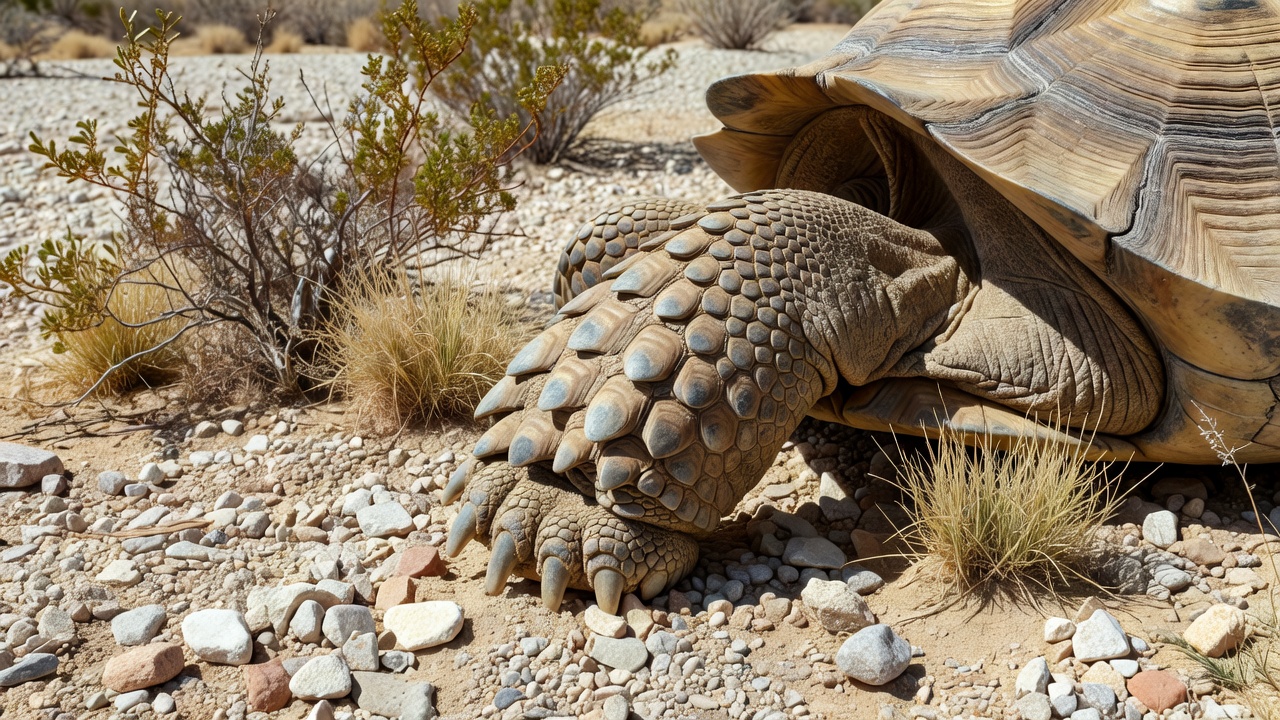
The Mojave desert tortoise, Gopherus agassizii, spends much of its life sheltered underground. Burrows buffer temperature extremes, and the bladder can function as an important water reserve. Seasonal activity depends on weather and food conditions, so a tortoise is not equally likely to be above ground throughout the year.
Handling can trigger urination and the loss of stored water. Do not pick up an animal for a portrait, offer inappropriate food or approach its burrow. Road encounters require local wildlife-agency guidance; visitor advice should not substitute for that authority. Disease, habitat fragmentation and disturbance make restraint important even when an individual looks robust. Other desert tortoises have different ranges and conservation contexts, so check the species rather than applying one profile everywhere.
Sandgrouse: water carried in feathers
In sandgrouse, males of several species carry water to chicks using specialised belly plumage. The arrangement and wetting properties of these feathers help retain water during the journey from a drinking place. It is an unusual connection between feather structure, parental care and the spacing of resources in an arid landscape.
This behaviour also makes drinking sites sensitive. Birds may delay approaching when people occupy the edge or interrupt their flight path. Avoid staking out scarce water for a close image. Use designated viewing arrangements where available, stay back and leave if birds circle or repeatedly retreat. Different sandgrouse species occupy different regions; a general account of water transport is not a local identification guide.
Sandfish: movement within the substrate
The sandfish skink, Scincus scincus, occurs in parts of North Africa and the Middle East. It moves through loose sand using body undulations, with limbs tucked close during subsurface movement. Its body form and scales interact with a granular material that behaves differently from either firm soil or water.
Sand is therefore more than scenery: grain size, compaction and temperature affect usable habitat. Do not rake dunes, dig for animals or drive across a promising patch to create a sighting. A disappearing trail is a complete observation. Notes about slope, wind and surface condition can preserve the context without exposing or capturing the animal.
Arabian oryx: restoration needs space
The Arabian oryx, Oryx leucoryx, is a major example of conservation breeding and reintroduction following extinction in the wild. Its story is not finished when animals are released. Long-term outcomes depend on protected habitat, effective management, genetic considerations and conditions across the wider landscape.
Oryx use shade and adjust activity in response to heat. Rainfall influences forage, and useful feeding areas can shift. In managed reserves, follow viewing rules and never turn an encounter into a vehicle pursuit. Check current conservation assessments directly: a memorable recovery narrative should not replace up-to-date evidence about populations and pressures.
Research note: detection is not abundance
A camera trap records animals that pass through its detection area. A track survey records signs that persist on a particular substrate. Neither directly counts every animal present. Survey effort, season and the probability of detecting a species all influence interpretation.
Check names and conservation context
- IUCN Red List — search scientific names and read assessment dates.
- U.S. Fish & Wildlife Service: desert tortoise
- Where drylands differ — place these adaptations in a landscape.