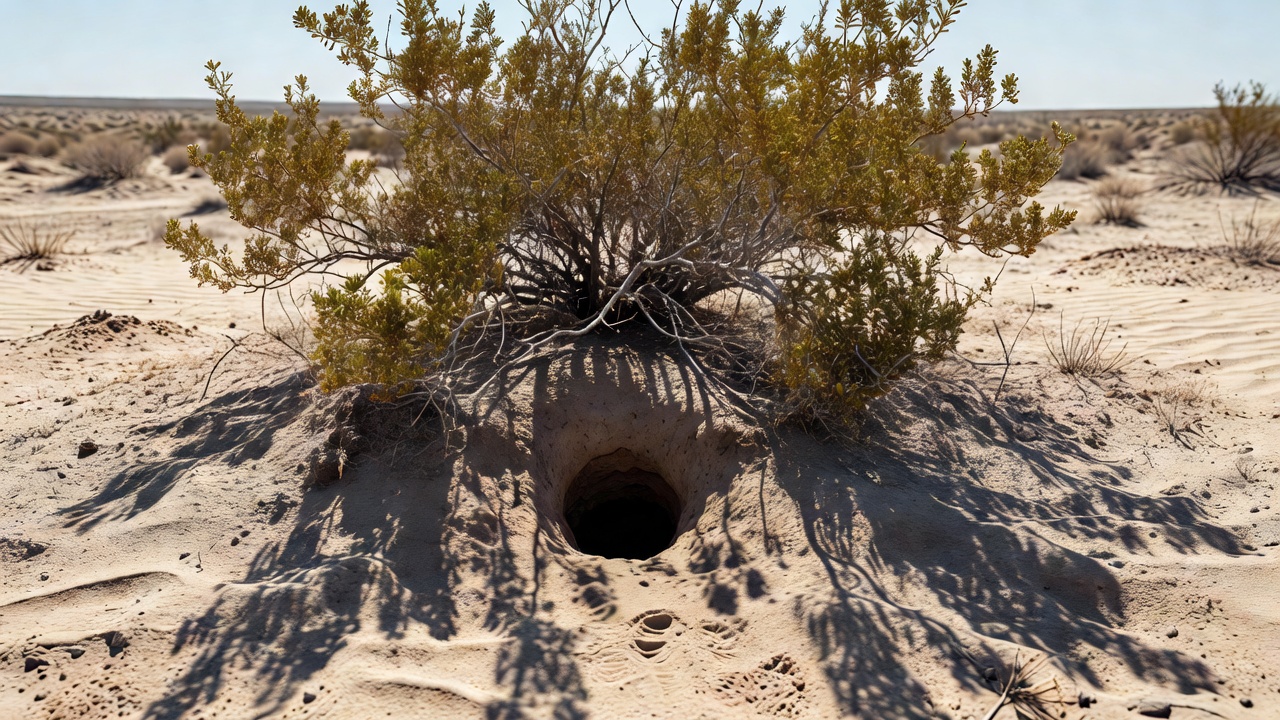
Dryland damage can be easy to underestimate. Sparse vegetation may make a landscape look unused, and a single wheel track may seem small beside an open horizon. Yet a shrub, a crusted surface or a narrow seasonal drainage can perform work that is not replaceable elsewhere nearby. Protecting desert wildlife means attending to these connections, not only protecting the ground beneath a rare animal at the instant it is seen.
Keep thermal refuges connected to food
An animal may need a cool shelter during the day and feeding habitat after dark. If a road, fence or heavily disturbed strip separates them, apparently suitable habitat can become harder or more dangerous to use. The effect depends on the species: a barrier that large mammals can cross may still obstruct smaller ground-dwelling animals.
Connectivity work therefore needs local evidence. Researchers may combine movement data, road mortality records, vegetation mapping and knowledge held by local communities. A corridor drawn on a map is a hypothesis until its function is assessed. Effective protection considers where animals can move safely under different seasons, not simply whether two protected-area boundaries nearly touch.
Follow the water beyond the pool
Groundwater extraction can affect springs and the vegetation associated with them. Changes to runoff can alter washes, while repeated disturbance around drinking places may interfere with access. Water infrastructure can also concentrate animals, potentially changing predation, disease transmission or grazing pressure. Installing water is not automatically a conservation improvement.
Decisions about artificial water points need ecological assessment and responsible management. Visitors should not dig pools, leave water containers or modify a spring to attract wildlife. Instead, support the authority or local organisation responsible for the site and ask how its decisions are monitored. A careful programme explains both the intended benefit and the possible trade-offs.
Ask what the research actually measures
Camera traps, acoustic recorders, track plots and environmental DNA can reveal different parts of an ecosystem. None provides a complete picture on its own. Cameras may miss small animals or favour particular routes. Acoustic methods depend on animals producing detectable sounds. Environmental DNA requires careful sampling and interpretation, including attention to transport and contamination.
Before treating a result as a population trend, ask whether survey methods and effort were comparable through time. Did the work account for imperfect detection? Was it repeated across seasons? A short study can be valuable while still having limited scope. Good communication makes those limits visible rather than turning every recorded absence into a decline or every detection into a recovery.
Include people who live with the landscape
Protected drylands are not necessarily empty of human history, rights or livelihoods. Indigenous peoples and local communities may hold detailed knowledge of seasonal resources, travel routes and ecological change. Conservation that ignores those relationships can create conflict and overlook evidence important to management.
Responsible visitors use authorised guides where appropriate, respect cultural restrictions and avoid treating every accessible-looking surface as public space. Support claims should be specific: who receives a benefit, what work is funded and how outcomes are assessed? A conservation label on a trip is not the same as evidence of community participation or measurable habitat care.
Make observation records useful and safe
A useful record distinguishes direct observation from interpretation. Include the date, general habitat, method, approximate distance and any uncertainty about identification. Keep original photographs where possible. Do not manipulate an animal, its shelter or vegetation to obtain a clearer record. If an identification remains uncertain, recording a broader group is better than forcing a species name.
Public coordinates can expose nests, dens and collectable species. Use the privacy features of a recording platform and follow local advice before submitting sensitive information. When a conservation authority requests precise data, use its designated reporting route. This guide does not collect wildlife coordinates, run emergency response or provide a secure repository for sensitive records.
Research note: climate pressure can change the refuge itself
Longer hot periods and changing rainfall can affect food supply, breeding windows and the conditions inside shelters. Assessing future refuges requires more than mapping today’s shade. Long-term monitoring and climate-aware planning help test whether protected places will continue to provide usable conditions.
Read the evidence and its limits
- International Union for Conservation of Nature — conservation science and protected-area guidance.
- U.S. Geological Survey — search for dryland ecosystems and biological soil crust research.
- United Nations Convention to Combat Desertification — land degradation and dryland policy context.
- Send an editorial question without sensitive coordinates.