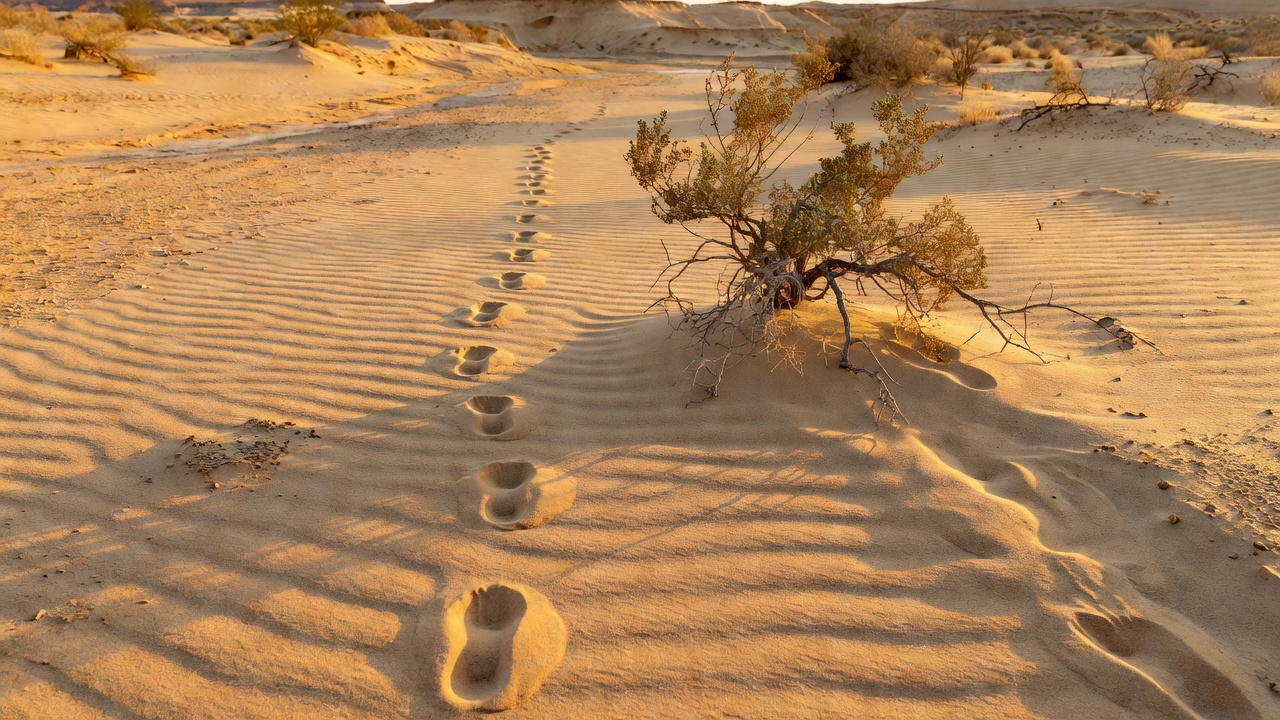
A desert is defined by aridity, not by a requirement for sand dunes or constant heat. Some deserts experience cold winters, coastal fog or strongly seasonal rainfall. Within one protected area, a rocky slope can sit beside a sandy wash and a compacted plain. Those surfaces differ in shelter, vegetation and the way water moves. Reading the differences is more useful than expecting every desert to produce the same animals.
The Namib: moisture without dependable rain
Along parts of Namibia’s coast, fog contributes moisture to a landscape with very low rainfall. The Namib Sand Sea lies within Namib-Naukluft National Park, while other coastal and inland habitats have their own ecological patterns. Fog exposure changes with distance, topography and weather; it is not a uniform resource covering the entire desert.
Some organisms use fog or dew, directly or indirectly. Claims about “fog-basking beetles” need care because behaviour differs among species, and popular accounts sometimes generalise from a few examples. Look instead at where tracks cross a dune, where vegetation catches material and which slopes hold shade. Use authorised access, respect fragile surfaces and rely on local park guidance rather than coordinates attached to a striking photograph.
The Mojave: washes, shrubs and long-lived refuges
Mojave National Preserve and Joshua Tree National Park offer different views of southwestern North American drylands. Joshua Tree includes both Mojave and Colorado Desert environments, so its name should not imply a single ecological setting. Elevation, winter conditions and rainfall timing all influence the vegetation and animals a visitor may notice.
Washes concentrate runoff, seeds and debris. Shrubs provide shade and structure, while burrows create below-ground refuges. Do not enter a wash merely because it looks like an easy wildlife corridor: upstream storms can make channels dangerous even when the sky overhead is clear. Check official alerts, carry appropriate water and choose established routes. The observer’s safety plan should not depend on finding natural water.
The Sonoran Desert: seasonal pulses
The Sonoran Desert spans parts of the southwestern United States and northwestern Mexico. In many areas, winter rainfall and summer monsoon storms create different opportunities for growth and animal activity. Saguaro National Park is one place to learn about cactus-dominated landscapes, but the wider desert also includes many other vegetation communities.
A flowering cactus, a fruiting shrub and newly active insects can connect rainfall to feeding opportunities across a food web. These pulses are variable, not a visitor timetable. Avoid trampling seedlings or standing beneath occupied nests to watch a feeding event. Observe from established paths and keep enough distance that animals can use flowers, fruit and shade without negotiating around you.
Arabian drylands: more than an open sand field
Arabian landscapes include gravel plains, dunes, rocky uplands and wadis. The Arabian Oryx Protected Area in Abu Dhabi illustrates the role of managed protection in a landscape where movement and forage matter. Reserve access, visitor arrangements and conservation priorities can change, so verify current information with the responsible authority before planning a visit.
Do not assume that a distant animal is available for approach simply because the ground between you appears open. Vehicles can compress escape choices, damage vegetation and leave persistent tracks. Guided access can help interpret a habitat when the operator follows reserve rules. It should not become permission to chase wildlife or seek restricted sites.
Compare the observation focus
| Habitat | Useful detail | Low-impact approach |
|---|---|---|
| Coastal fog desert | Moisture patterns and track persistence | Stay on authorised routes; protect delicate surfaces. |
| Sandy wash | Runoff lines, shrubs and burrow context | Check flood warnings; never obstruct shelter. |
| Seasonal cactus scrub | Flowering, fruiting and shade | Use paths and let feeding animals approach naturally. |
| Gravel plain | Scattered forage and movement routes | Keep vehicles on permitted tracks; do not pursue. |
Research note: a bare surface may be living habitat
Biological soil crusts can include cyanobacteria, lichens, mosses and other organisms. They influence erosion and soil processes, but their appearance and recovery vary by region. Absence of obvious plants does not establish that a surface can tolerate foot or vehicle traffic. Follow local route guidance rather than trying to test a crust yourself.
Plan around weather, permission and habitat interpretation. A successful visit may produce no identifiable animal at all, yet reveal fresh tracks, a rain response or a refuge that explains how the ecosystem works.